The Appalachian Atmospheric Interdisciplinary Research Program (AppalAIR) was initiated to better understand changing regional meteorology, air quality, and their impacts on climate change and ecosystem health.
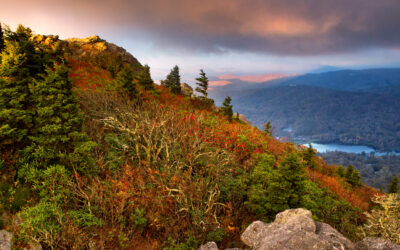
The heavily-forested southeastern U.S. is home to some of the highest concentrations of biogenic volatile organic compounds in the U.S., which interact with pollution from power plants and vehicles to impact regional air quality (i.e. the ‘blue haze’ seen in summer months-Figure 1), meteorology, and ecosystem health. The resulting haze may have contributed to the region’s lack of warming during the 20th century. The effects of improved regional air quality during the past two decades on regional weather, climate, and ecosystem health necessitate long-term measurements from regionally-representative sites, such as those at high-elevations away from urban sources However, there are few (and in some cases, no) mountainous sites in the U.S. with sufficiently comprehensive long-term datasets needed to improve climate and air quality models.
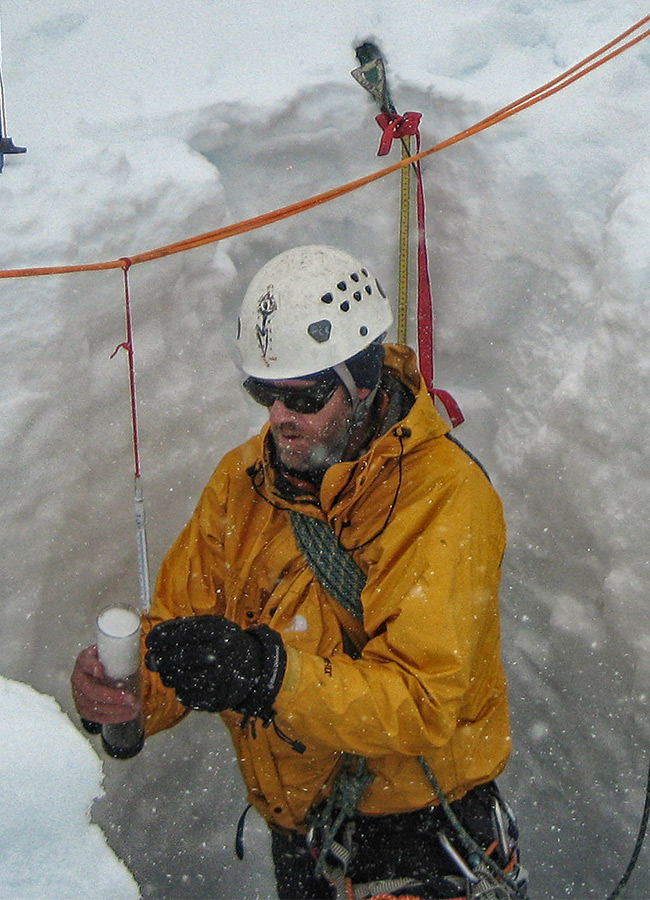
The AppalAIR facilities at Appalachian State University are home to the only co-located NOAA Global Monitoring Division (NOAA GMD), NASA AErosol RObotic NETwork (NASA AERONET), and NASA Micro-pulsed Lidar Network (NASA MPLNET) aerosol monitoring sites in the U.S., along with co-located meteorological stations, trace gas measurements (ozone, carbon dioxide), and measurements of snowfall events. As such, AppalAIR is uniquely positioned to improve understanding of regional pollution transport and the interactions between air quality, meteorology, climate change. The AppalAIR sites are unique in that students play major roles in data collection, instrument maintenance, and analysis of scientific data.
AppalAIR scientists and the many participating student researchers also have developed and manage citizen science networks of atmospheric measurements to compliment and expand upon research activities at AppalAIR, including the NASA-funded Climate Action Network through Direct Observations and Outreach (CAN-DOO; PI Brett Taubman) and the North America and Sub-Saharan Africa Mountain Aerosol Network (NASA-MAN; PI James Sherman).